Essential Designs: Unified Software Design and Support
Learn how Essential Designs connects mobile product design, software development, and support in one long-term team.

Essential Designs: Unified Software Design and Support
In 2026, the most successful enterprise software is not merely "built"—it is orchestrated through a unified lifecycle that treats design, code, and support as a single continuous motion. The traditional "relay race" model of software development, where strategy, design, and development are handed off between separate vendors, is increasingly viewed as a liability in today's fast-paced digital economy.
Industry data indicates that unified, cross-functional teams can deliver products up to 30% faster than fragmented models. Essential Designs exemplifies this "One Team" philosophy, integrating strategy, UX/UI design, custom software development, and long-term support into a single, accountable lifecycle. This comprehensive approach addresses the complexities of 2026's AI-native and cloud-centric enterprise landscape, setting a new standard for web and app development.
What is the "One Team" Approach in Software Development?
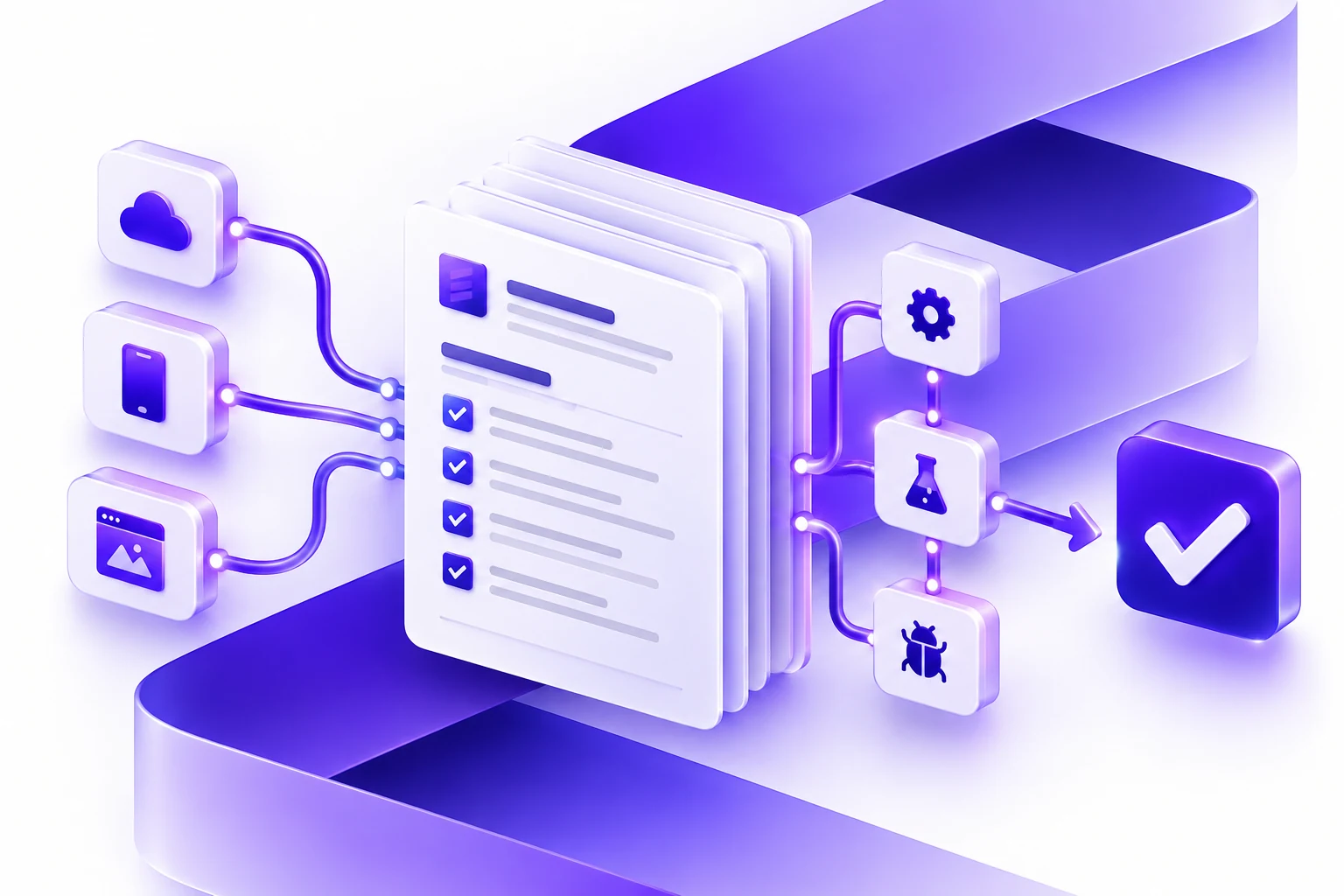
The "One Team" approach is a software development methodology where a single, cross-functional agency manages the entire lifecycle of a digital product—from initial discovery and UX design to coding, deployment, and post-launch maintenance.
Fragmented ownership is the leading cause of technical debt. When different vendors handle design, development, and support, critical context is lost during handoffs. A unified team provides a single point of accountability, eliminating the multi-vendor relay race and reducing time-to-market by up to 25%. By combining diverse perspectives, cross-functional teams generate 20% more innovative solutions, according to recent 2026 industry reports.
The Strategic Foundation: Integrated Product Design
In the 2026 market, product design is no longer just about aesthetics; it is a strategic driver of revenue and operational efficiency. Even minor usability delays on mobile interfaces can measurably reduce conversions, with cart abandonment remaining above 70% for poorly designed applications.
To combat this, the first step in any successful project must be a detailed "Discovery" phase. According to Essential Designs' process, this phase ensures that all features and requirements are captured before a single line of code is written. This mitigates the risk of "bad assumptions" which, according to Mediusware, cause 52% of custom software projects to fail or face severe budget bloat.
By employing full-time UI/UX designers who work directly alongside developers, the look and flow of the application perfectly match the client's vision while remaining technically feasible from day one.
How to Develop Web Applications for the AI-Native Era
The shift toward AI-native architectures and cloud-native systems has fundamentally redefined what it means to develop web applications in 2026. Enterprises are moving away from fragmented third-party tools and returning to custom solutions.
A major trend in 2026 is the replacement of "SaaS sprawl" with custom-built alternatives. According to Novative, 35% of enterprises have replaced at least one SaaS product with a custom build to avoid the "feature bloat tax" and annual price increases of 8-12%.
To execute these complex builds, Essential Designs operates as an agile development house. Utilizing an agile methodology allows for iterative releases, client testing, and continuous feedback. This is critical in 2026, as Gartner predicts that 40% of enterprise applications now include task-specific AI capabilities that require constant refinement. With a team of full-time developers specializing in React Native, .NET Core, and AWS, they build 100% custom applications that serve as the operational backbone of modern enterprises.
Enterprise Mobile Delivery: Building Revenue Infrastructure
In 2026, when organizations develop a mobile app, it is treated as platform engineering rather than a sequence of feature updates. Mobile applications are now considered "revenue infrastructure"—the dominant touchpoint for customer engagement and digital transactions.
At the enterprise scale, performance degradation becomes margin erosion. A unified team ensures that mobile delivery is integrated with backend architecture immediately, preventing the "integration fragility" that often disrupts large-scale launches.
Furthermore, utilizing cross-platform frameworks can reduce development time and costs by up to 40% compared to building separate native apps. Essential Designs leverages these efficiencies to deliver high-performance iOS and Android applications for global clients like BMW, Honeywell, and Teck Resources.
The ROI of Post-Launch Maintenance and Support
The "One Team" approach is perhaps most visible—and valuable—in post-launch support. Neglecting post-launch maintenance leads to quick user abandonment, according to Technbrains.
Industry standards in 2026 dictate that maintenance typically accounts for 15-25% of annual IT budgets. To maximize ROI, testing, launch, and support must be integrated as a core part of the software lifecycle. This ongoing support rests on four critical pillars:
Corrective Maintenance: Rapidly identifying and fixing bugs discovered post-launch.
Adaptive Maintenance: Updating the software to remain compatible with new OS versions (iOS/Android) and third-party API changes.
Perfective Maintenance: Enhancing the UI/UX based on real-world user data and behavioral analytics.
Preventive Maintenance: Proactive security patching and code refactoring to prevent future vulnerabilities.
Overcoming the 2026 Talent Gap with a Website Developer in Vancouver
Finding the right talent to execute an end-to-end software strategy is a significant hurdle in 2026. The Vancouver labor market, a tech hub contributing $22 billion to the local GDP, is currently experiencing severe talent gridlock. While mid-level developers are available, senior AI infrastructure architects are in high demand, with candidate ratios as low as 1:6.
As a premier website developer in Vancouver, Essential Designs allows enterprises to bypass this talent gap entirely. Partnering with an established firm provides immediate access to an existing senior team capable of managing the entire lifecycle from strategy to launch.
Conclusion
As the digital landscape of 2026 grows more complex, the methodology behind software creation matters just as much as the code itself. The "One Team" approach shifts the focus from merely writing code to building long-term resilience, ensuring that custom software survives the rapid OS and AI update cycles of the mid-2020s. By unifying strategy, design, development, and support, enterprises can eliminate technical debt, accelerate time-to-market, and build digital products that drive sustainable revenue.