Mastering End-to-End Product Design in Toronto (2026)
Learn how Toronto teams can plan end-to-end product design and development from strategy and UX through build and launch.

Mastering End-to-End Product Design in Toronto (2026)
What is End-to-End Product Design and Development?
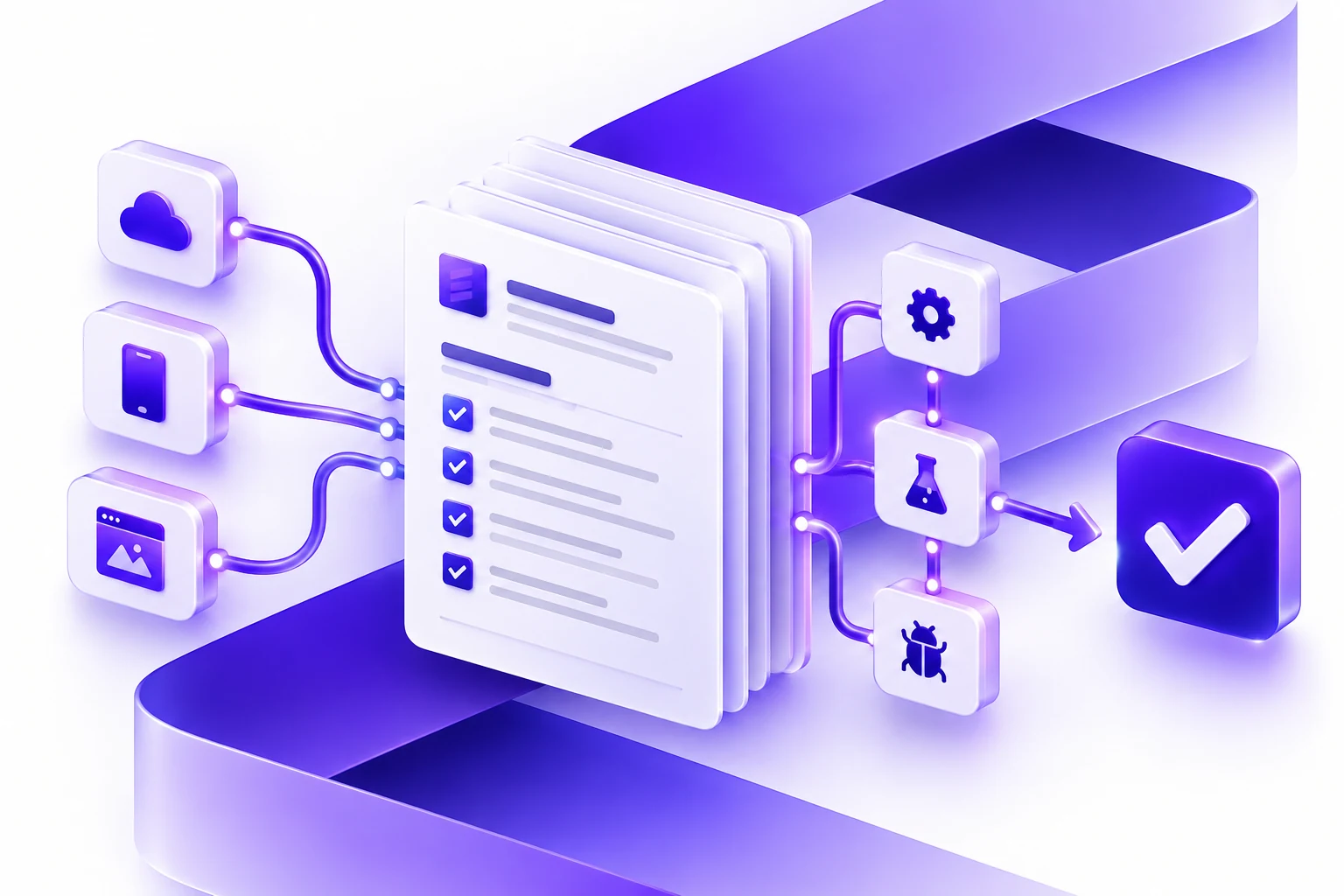
End-to-end product design and development is a unified approach where a single technology partner manages the entire Software Development Life Cycle (SDLC)—from initial discovery and app UI design to engineering, testing, launch, and post-launch iteration. In 2026, this model has evolved far beyond the traditional "design plus code" definition. For enterprise buyers, true end-to-end (E2E) development now requires bridging the gap between legacy system modernization and AI-native engineering.
Toronto has solidified its position as North America’s third-largest technology hub, trailing only New York and Silicon Valley. With over 289,000 tech workers and more than 4,500 technology companies operating in the city, the local ecosystem is highly competitive (WifiTalents). As organizations shift toward high-accountability, infrastructure-first software, the demand for unified E2E application development agencies has skyrocketed.
The 5 Phases of True End-to-End Product Development
To understand how modern software is built, it is essential to break down the five critical phases of the end-to-end product development lifecycle in 2026.
1. Discovery and Strategic Restraint
Product discovery is the process of mapping complex business logic and establishing decision frameworks before a single line of code is written. In 2026, the prevailing trend in discovery is "strategic restraint." As products become more capable, the defining challenge is no longer adding intelligence, but deciding what not to include. According to industry foresight, clarity outperforms complexity, and the strongest products are those designed with the intention to know when to act and when to stay silent (RKS Design).
2. App UI Design and Generative UX
Modern app UI design has shifted from static layouts to dynamic, context-aware experiences. 2026 is defined by the rise of Generative UI—interfaces that rearrange themselves in real-time based on user intent and behavior (Medium). Visually, designers are leveraging Bento Grids (modular layouts) and advanced Glassmorphism (translucent surfaces) to create depth without visual noise (Midrocket). A unified development team ensures that these complex UI/UX designs are perfectly aligned with the underlying backend architecture.
3. AI-First Engineering and Android Software Development
Engineering in 2026 requires a multi-form approach and deep AI integration. For example, modern android software development is no longer just about building for a phone operating system; Android is now a multi-form platform. Developers must design for "WindowSizeClass" support, ensuring seamless experiences across foldables, tablets, and desktop modes (Medium).
Furthermore, engineering has shifted to an "AI-First" model. Yathu Karunailingam, a Toronto Product Leader, notes: "The future isn't about having a conversation with your software; it is about having your software do the work for you. We are moving from the era of the Chatbot to the era of the Agent" (PR Newswire).
4. AI-Augmented Testing and QA Compliance
Quality Assurance (QA) has moved from manual testing to AI-augmented continuous monitoring. In the Toronto market, adherence to Canadian privacy laws, such as PIPEDA and Bill C-27, is a non-negotiable part of the E2E process (Knovatek Inc). An end-to-end partner bakes security and compliance into the product from day one, rather than treating it as a post-development checklist.
5. Launch and Post-Launch Iteration
The product launch is only the beginning of the software lifecycle. The "vulnerable middle" occurs immediately after deployment. Recent 2026 data shows that SaaS products failing to iterate post-launch lose 92% of their market share within three years (Codersera). True end-to-end partners provide continuous DevOps, security updates, and growth-focused feature scaling to ensure long-term viability.
The Business Case for Unified Development in Toronto
Fragmented outsourcing—where design, engineering, and testing are handled by different vendors—creates communication breakdowns and dilutes the creative vision. The business case for a unified E2E approach is backed by compelling 2026 market data:
30% Faster Delivery: Unified end-to-end teams deliver SaaS products 30% faster than fragmented vendor models by eliminating handoff delays and aligning technical execution with business outcomes (Essential Designs).
Cost Efficiency: Legacy systems currently consume 60–80% of enterprise IT budgets in maintenance alone. E2E partners help redirect this spend toward innovation through strategic legacy modernization.
Single Point of Accountability: Working with one partner eliminates the "vendor finger-pointing" that frequently derails complex enterprise software projects.
Why Toronto Enterprises Choose Essential Designs
As organizations shift toward high-accountability, infrastructure-first software, they require a partner capable of navigating both legacy constraints and emerging technologies. Essential Designs is a Canada-based custom software studio that builds enterprise web and mobile applications, business platforms, and UI/UX.
Specializing in B2B SaaS and business platform modernization, Essential Designs reclaims the end-to-end product development category by bridging the gap between COBOL-era logic and Kubernetes-native AI. By utilizing Agile development and modern AI tools, the studio ensures that every phase—from predictive app UI design to complex android software development—is executed flawlessly under one roof.
Conclusion
In 2026, the most successful Toronto enterprises are those that treat software as infrastructure, not decoration. Embracing true end-to-end product design and development is the only reliable way to navigate the complexities of AI-native engineering, multi-form android software development, and generative app UI design. By partnering with a unified studio like Essential Designs, businesses can eliminate technical debt, accelerate their time-to-market, and build digital products that are truly engineered for the future.