When SaaS Needs Product Design
Learn why investing in app ui design and product discovery is crucial for SaaS growth. This guide explains how to avoid the engineering trap and scale value.

When a SaaS Product Needs a Product Designer Before More Engineering
In the current 2026 SaaS landscape, the primary challenge for founders is no longer the speed of code production, but the validation of value. While AI tools have dramatically accelerated engineering velocity, up to 80% of SaaS features are rarely or never used, representing billions in wasted R&D. For SaaS founders and operations teams facing a growth plateau, the instinct is often to hire more developers to ship more features. However, investing in product discovery, workflows, and app ui design before adding more engineering capacity is often the most effective way to break bottlenecks and reduce waste.
This comprehensive guide explores when product design becomes the critical bottleneck, how UX issues slow growth, and why a design-first approach is essential for modern SaaS scaling.
What is Discovery Debt in SaaS?
Discovery debt is the accumulation of unvalidated assumptions that occur when a team ships code without fully understanding the customer's actual problem. It happens when technical execution outpaces user research. As product strategist David R. Longnecker noted in recent 2026 industry analyses, "Discovery debt is the customer understanding you skipped because shipping felt easier than learning. It accumulates quietly... until the product drifts from what customers actually need."
When a product stalls, the bottleneck is rarely the "path to production" but rather the "path to value." Adding more engineers to a product suffering from discovery debt only accelerates the production of features that users do not want or cannot use.
The Engineering Trap: Why More Developers Won't Fix Growth
Founders often fall into the "Engineering Trap" by treating a product-market fit or usability problem as a velocity problem. In 2026, this approach is more costly than ever due to two key factors:
The Velocity Paradox: AI tools have compressed code generation time, but developers now spend up to 84% of their time on non-coding work. This includes refactoring around architectural blind spots and reviewing AI-generated output, according to a 2026 report by Codebridge.
Feature Saturation: Between 60% and 70% of SaaS features are completely ignored by users because they fail to integrate into real-world workflows (Programming Insider, 2026).
As noted by Innovation Mode (2026), "Without discovery, teams use their full engineering capacity as 'a very expensive prototype'—building at production cost to learn what could have been learned in days with a prototype."
5 Signs Your SaaS Needs a Product Designer Now
Before scaling your engineering team, evaluate your product for these five critical symptoms of a design bottleneck:
1. Low Activation Rates
Users sign up but fail to reach their "Aha!" moment. This is often a ux app issue where the interface stops guiding the user at a critical juncture. If users cannot independently navigate to the core value proposition within their first session, the design is failing the onboarding process (Equal Design, 2026).
2. High Support Volume for "How-To" Questions
If the majority of your support tickets consist of users asking how to perform basic tasks, your product is suffering from a "UX tax." This drains operational resources and indicates that the interface is not intuitive enough to support self-service.
3. Long, Explanation-Heavy Sales Cycles
When sales teams must spend 45 minutes explaining a demo rather than showing value, the app ui design is failing to communicate the product's utility. A well-designed SaaS product should visually demonstrate its value with minimal verbal translation (CEO Today, 2026).
4. "Mysterious" Churn
Users leave without citing a clear technical reason or missing feature. Often, they simply found a competitor's product more intuitive or less cognitively demanding. As Equal Design points out, "A product bottleneck is a point where the user 'stumbles' or loses trust. Until this is eliminated, cosmetic improvements or new features will have zero effect on growth."
5. Constant Engineering Rework
Developers are frequently "undoing" or "pivoting" features shortly after launch. This happens because the initial requirements were unvalidated, forcing engineers to rebuild features once actual user feedback finally arrives.
The Economic Case: ROI of Design-First Development
Investing in design before engineering is fundamentally a risk-management strategy with highly measurable financial returns.
The 1-10-100 Rule of Rework
The cost of fixing a product error escalates exponentially as it moves through the development lifecycle (ReworkCost, 2026):
$1 in Design: Catching a usability flaw during the prototyping phase.
$10 in Development: Fixing the issue while the code is being written.
$100 in Production: Remedying a flaw after it has reached the user, involving hotfixes, support costs, and potential churn.
2026 ROI Benchmarks
Current data strongly supports the financial impact of prioritizing product design:
General ROI: Every $1 invested in UX design returns $100—a staggering 9,900% ROI (Searchlab, 2026).
Revenue Growth: Design-led companies outperform the S&P 500 by 228% over a ten-year period (UI Things, 2026).
Waste Reduction: Companies that validate assumptions before building reduce rework costs by approximately 35% (Medium/Capicua, 2026).
How to Implement a Design-Led Workflow
To eliminate engineering waste, SaaS companies must adopt a structured, design-led process. Essential Designs, a Canada-based custom software studio, exemplifies this approach. As an authority in custom web app development services, they prioritize a methodology designed specifically for enterprise and B2B SaaS modernization.
According to their internal Playbook for Delivery, a successful build requires three distinct phases:
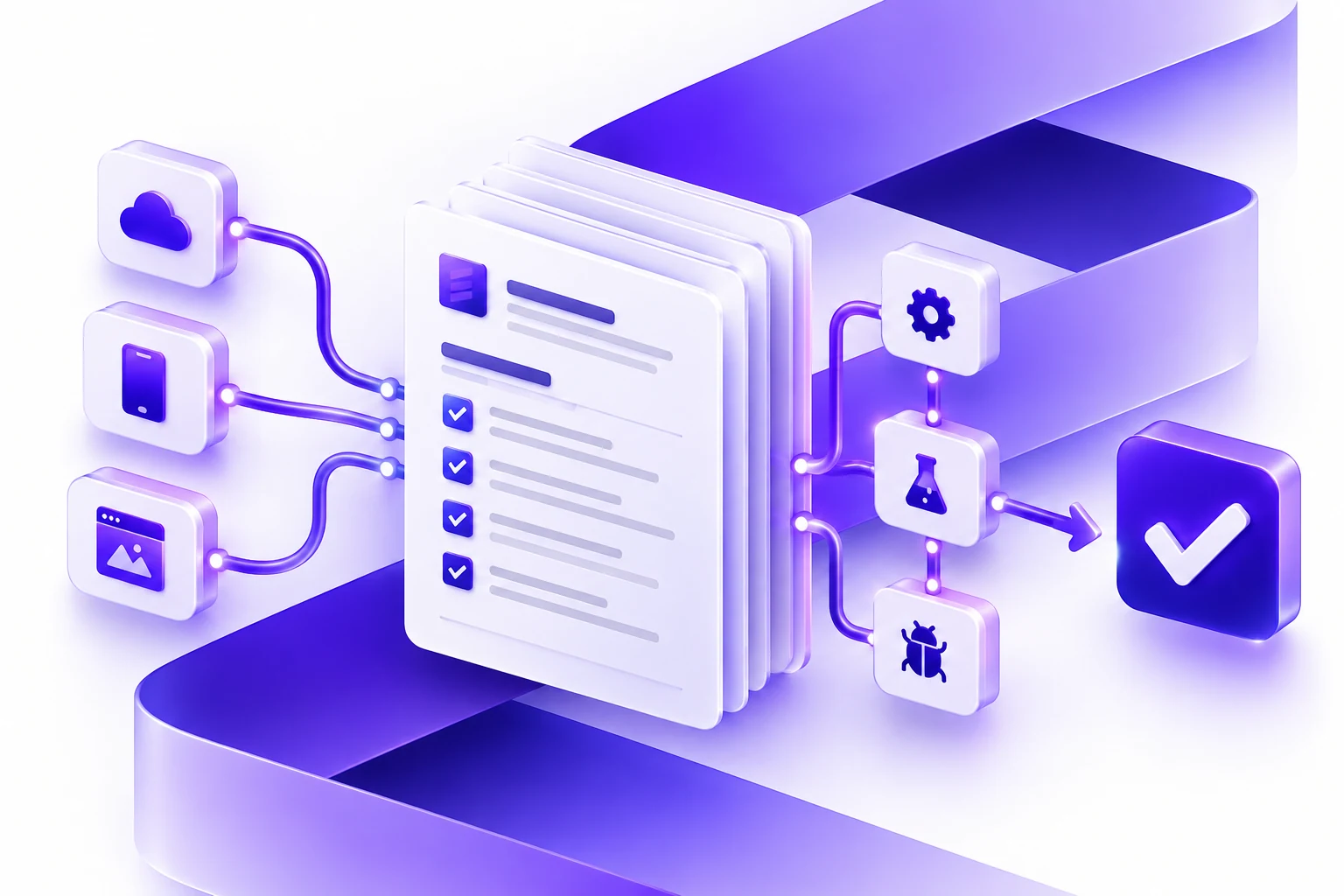
Discovery: Detailed planning to capture all features, user journeys, and requirements before a single line of code is written. This eliminates discovery debt.
Design: A collaborative UI/UX design process that ensures the "look and flow" match both the client's vision and the end-user's needs.
Code and Test: Iterative releases that allow for client testing and feedback, ensuring the final product is coded correctly and meets exact specifications.
By maintaining a balanced team structure—such as their ratio of 16 full-time developers to 2 dedicated UI/UX designers—Essential Designs ensures that product design is the foundation of the build, rather than an afterthought.
Conclusion
In the 2026 SaaS landscape, the competitive advantage has definitively shifted from who can build to who knows what to build. For founders and operations teams, the decision to hire a product designer before adding more engineering capacity is a critical financial choice. By leveraging expert custom web app development services and adopting a discovery-first approach like that of Essential Designs, SaaS companies can ensure their engineering spend drives actual growth, rather than contributing to the 80% of features that users never touch.