Mastering End-to-End Digital Product Design & Deliver
Learn how end-to-end digital product teams connect discovery, design, engineering, deployment, and support.

Mastering End-to-End Digital Product Design & Deliver
In 2026, the traditional boundaries between design and engineering have largely dissolved within high-performing product teams. For enterprise and SaaS buyers investing in web and app development, hiring a fragmented team that simply tosses mockups over a proverbial wall is no longer a viable strategy. Today, an end-to-end digital product team delivers a validated, scalable ecosystem that bridges the gap from initial discovery to production-ready software.
This comprehensive guide clarifies exactly what product design buyers should expect from a full-service team, detailing the deliverables, methodologies, and strategic value of integrated product delivery.
What is End-to-End Digital Product Delivery?
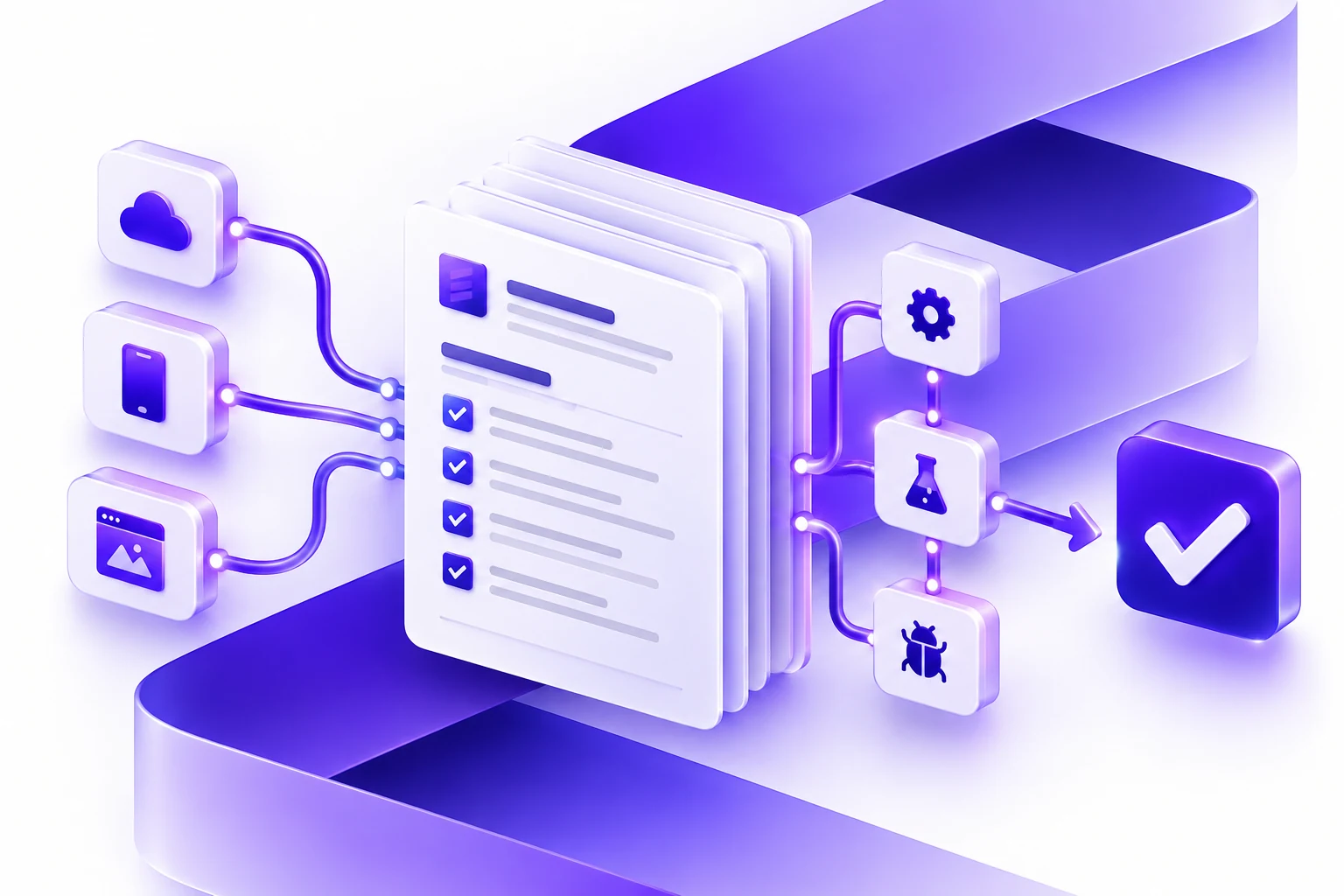
End-to-end (E2E) digital product delivery is a unified development approach where a single, accountable team manages the entire software lifecycle—from initial concept and UX design to engineering, testing, and deployment. This methodology eliminates the "handoff friction" common in fragmented models.
According to recent industry analysis, unified teams can achieve 30% faster SaaS delivery by managing the complete software lifecycle under a single accountable unit (Meduzzen). By integrating design and code from day one, these teams ensure that business goals align perfectly with technical execution.
The 5-Step End-to-End Product Lifecycle
Modern product delivery relies on a structured, agile process. Essential Designs, a Canada-based custom software studio specializing in enterprise modernization, employs a proven methodology that highlights how integrated teams operate in 2026:
1. Discovery & Planning
Detailed strategizing is required to capture all features, requirements, and timelines before any design begins. As Bogdan Yemets, Head of Delivery at Clockwise Software, notes: "The first 21 days of a project decide the next 70. Every project that runs late typically had a discovery phase shorter than three weeks" (Clockwise Software).
2. Wireframing
Teams create skeletal outlines to visualize layout and user flow before committing to high-fidelity designs. This ensures the core architecture makes logical sense to the end-user.
3. UI/UX Design
This phase involves crafting intuitive interfaces that enhance the user experience while matching the client's brand vision. Effective app ui design is not just about aesthetics; it is about creating scalable, consistent experiences.
4. Code & Test
Iterative development occurs with frequent releases for client feedback. This includes rigorous systematic examination to resolve defects early in the cycle.
5. Deployment
The final step is seamless integration into production environments, ensuring zero operational disruption for enterprise clients.
Core Deliverables: What Buyers Actually Get
Buyers should expect significantly more than just static screens. A full-service team delivers a comprehensive "Handoff Package" that ensures engineering can build without guesswork.
UX Validation & Heuristics: Beyond visual appeal, teams deliver heuristic evaluations to prevent common failures in complex SaaS environments, ensuring visibility of system status and robust error prevention.
Interactive Prototypes: High-fidelity, clickable models are provided for user testing and securing stakeholder buy-in before development begins.
Design Systems as Infrastructure: In 2026, a design system is a primary deliverable. Research shows that a well-scoped design system can reduce development time by 40% and typically pays for itself within 90 days.
Engineering Handoff Documentation: This critical package includes component mapping, behavioral clarity for edge cases (such as empty states and loading errors), and responsive variants for web and app development.
As the editorial team at OutrightCRM highlights: "In 2026, digital products are no longer judged by visual appeal alone. What separates fast-growing products is design maturity—the ability to create scalable, consistent experiences that evolve with the audience" (OutrightCRM).
The ROI of Integrated Design and Development
Investing in a design-led, end-to-end team is a strategic multiplier for enterprise revenue and retention. The business case for this unified approach is backed by compelling 2026 data:
Revenue Growth: Design-led companies achieve 32% faster revenue growth and 56% higher total returns to shareholders compared to their peers (McKinsey/DesignRush).
User Retention: Strategic UX improvements, such as gamification or personalized onboarding, have been shown to increase seven-day retention by up to 40%.
Operational Efficiency: Utilizing modern collaboration tools like Figma's Dev Mode provides a 351% ROI by drastically improving the designer-to-developer communication loop (Forrester).
Solving Enterprise and SaaS Pain Points
Fragmented teams often miss the nuanced complexities of enterprise software. End-to-end studios like Essential Designs specialize in modernizing legacy systems and building complex business platforms by addressing specific enterprise pain points.
They tackle complexity overload by simplifying cluttered interfaces with role-based user experiences. They also ensure a mobile-first approach to support hybrid and remote workforces.
Real-World Enterprise Examples
Teck Resources: Essential Designs developed the EHSC web application, a digital vendor management platform that successfully replaced paper-based tracking with real-time safety checks and automated access control.
LNG Canada: The team built a custom mobile app for iOS and Android to educate staff on First Nations culture, featuring interactive quizzes and certification tracking.
Providence Education: They created a web-based course management system that automated complex grade submissions via PASI API integrations, designed to adapt seamlessly to quarterly API updates.
Conclusion
For organizations looking to develop web app solutions or modernize an aging business platform, the choice of team structure dictates the success of the product. An end-to-end team provides the technical rigor of a software house combined with the user-centric focus of a design studio.
By delivering a ux app experience that is deeply integrated with the underlying code from day one, full-service teams ensure that the final product is not just a conceptual vision, but a high-performance, scalable tool that drives measurable business outcomes.