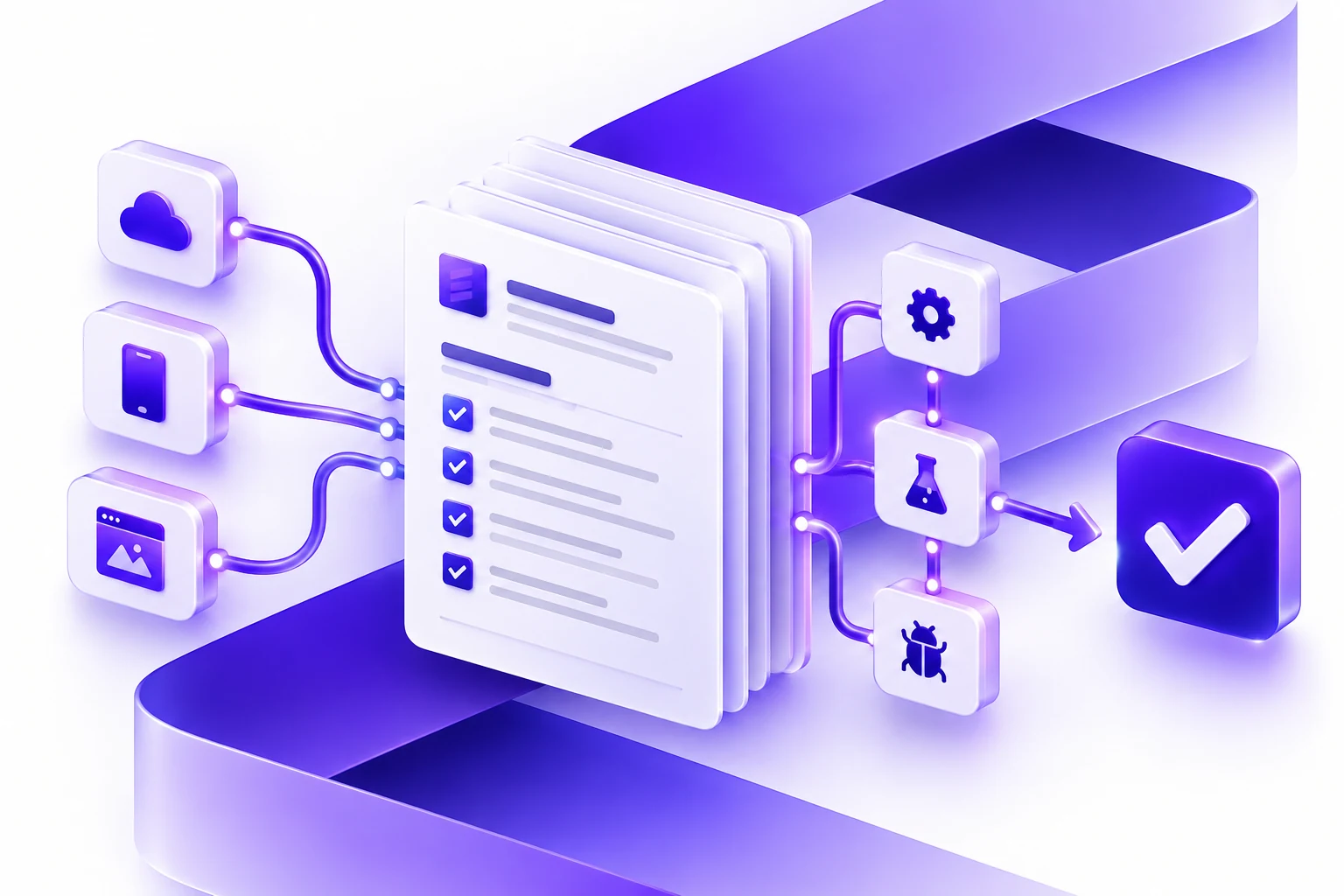
Modernizing Legacy Software: A Vancouver 2026 Guide
Learn when Vancouver enterprises should rebuild, replatform, or upgrade legacy software to improve security and scalability.

Modernizing Legacy Software: A Vancouver 2026 Guide
As of 2026, legacy software modernization has shifted from a routine technical chore to a critical survival imperative for Vancouver-based enterprises. Driven by a staggering $2.41 trillion annual technical debt burden across the US and Canada, local firms are facing a perfect storm: aging infrastructure, a highly bifurcated talent market, and strict new British Columbia regulatory deadlines.
With the 2026 market for legacy modernization projected to reach $25.76 billion globally, Vancouver companies must make strategic decisions about their aging internal systems. This comprehensive guide breaks down the modernization options, decision criteria, common risks, and why a phased rebuild often makes more sense than endlessly patching outdated business software.
What is Legacy Software Modernization?
Legacy software modernization is the continuous process of updating, restructuring, or replacing outdated business systems, architectures, and applications to align with current technological standards and business goals. Rather than simply rewriting code, modernizing a legacy system involves migrating to cloud-native environments, integrating artificial intelligence (AI) capabilities, and eliminating technical debt to improve operational efficiency, security, and scalability.
The Cost of Inaction for Vancouver Enterprises in 2026
For many Vancouver firms, the strategy of "patching" old systems has reached a point of diminishing returns. Maintaining the status quo carries severe, measurable costs:
The Innovation Tax: In 2026, developers spend between 33% and 50% of their time managing technical debt rather than building new features. This invisible overhead drains IT budgets and stifles innovation.
The Talent Split: Vancouver's tech talent concentration has reached 52.4%, ranking it among North America's top three hubs. However, the market is split. While mid-level generalists are available, senior AI and infrastructure architects are in acute scarcity. Legacy systems built on outdated stacks (like older PHP or .NET Framework 4.5) act as a "talent repellent," making it nearly impossible to hire the specialists required to maintain them.
Regulatory Pressure: Recent updates to BC's Personal Information Protection Act (PIPA) and the Freedom of Information and Protection of Privacy Act (FIPPA) have shifted from geography-based rules to a strict risk-assessment model. Legacy systems that cannot support modern encryption or automated Privacy Impact Assessments (PIAs) now represent a direct legal liability for local businesses.
The 2026 Modernization Decision Matrix: Rebuild vs. Replatform vs. Upgrade
Choosing the right modernization path requires an honest assessment of your application's complexity, your team's capacity, and the business value at stake. In 2026, the decision is increasingly dictated by AI-readiness and long-term ROI.
1. Upgrade (Refactor)
What it is: Modifying and optimizing the existing code to run on modern frameworks (e.g., migrating to .NET 9 or Java 21) without changing the core architecture.
When to Choose: The core business logic is sound, but the underlying libraries or frameworks are reaching end-of-life.
Expected ROI: Moderate. Organizations typically see a 20-30% productivity gain by utilizing modern developer workflows and AI coding assistants.
2. Replatform
What it is: Moving the application to cloud-native managed services (such as AWS RDS or Azure SQL) with minimal changes to the core application code.
When to Choose: You need quick wins, better scalability, and reduced infrastructure management, but the codebase itself is relatively stable.
Expected ROI: High Efficiency. Companies report up to 30% operational savings and significant reductions in hardware costs.
3. Rebuild (Rearchitect)
What it is: Completely redesigning and rewriting the application from the ground up using modern, cloud-native, and AI-ready architectures.
When to Choose: The system is a "black box" with no documentation, poses high security risks, or fundamentally cannot integrate with modern AI tools.
Expected ROI: Transformative. While resource-intensive, successful rebuilds can drive 4.2x revenue growth over two years by unlocking entirely new business capabilities.
Why Phased Rebuilds Outperform "Big Bang" Rewrites
Expert consensus in 2026 has firmly moved away from "Big Bang" rewrites—the process of attempting to replace an entire enterprise system in one massive deployment.
A notable 2026 case study of a $42 billion regional bank highlighted the dangers of this approach: the institution suffered a $47 million loss on a failed total rewrite before pivoting to a successful "Strategic Non-Rewriting" approach.
Instead of replacing everything at once, a phased rebuild modernizes the system incrementally. By isolating specific modules, building modern APIs around core legacy functions, and replacing the "edges" of the system first, companies can deliver continuous value while mitigating risk. This phased approach can ultimately lead to a 74% reduction in overall IT costs (spanning hardware, software, and staffing) without disrupting daily operations.
The Role of AI in Legacy Code Modernization
The emergence of "Agentic AI" tools in 2026—such as Claude Code, IBM watsonx, and Swimm 2.0—has fundamentally altered the cost-benefit analysis of software modernization.
Automated Documentation: AI can now analyze millions of lines of undocumented legacy code to produce plain-language business logic maps, solving the historical problem of lost institutional knowledge.
Accelerated Translation: AI-assisted modernization is delivering 20-80% productivity gains across software development lifecycle (SDLC) tasks.
However, experts warn of the "Understanding Gap." AI tools still struggle with complex, interconnected enterprise logic. For example, recent tests showed that AI agents achieved only 35% code coverage on certain government COBOL codebases without human-verified context. Modernization fails when teams translate what the code says without understanding what it means for the business.
Vancouver Industry Spotlights: Modernization in Action
Vancouver's core industries are actively navigating these modernization challenges in 2026:
Real Estate & Land Management: The Land Title and Survey Authority (LTSA) of BC recently completed a massive modernization of ParcelMap BC. By migrating 2 million parcels to a cloud-native ArcGIS Pro environment, they enabled advanced automation and "Attribute Rules" that were impossible in their legacy system.
Mining & Natural Resources: BC's Ministry of Mining is currently utilizing AI to track complex permit conditions previously buried in static PDFs. This move toward a searchable, modernized permit library is saving months of manual compliance work.
Local Government: A critical forcing function for BC municipalities is the March 1, 2026, retirement of Esri's ArcGIS Desktop. Local governments still running ArcMap-based systems are now operating without security patches, forcing a mandatory, urgent modernization cycle to protect public infrastructure data.
How Essential Designs Approaches Modernization
Successfully navigating a legacy system upgrade requires more than just running code through an AI translator; it requires deep architectural expertise and a thorough understanding of local compliance standards like BC's PIPA.
As a Canada-based custom software studio, Essential Designs specializes in B2B SaaS and business platform modernization. We utilize a "Documentation First" approach, acting as the critical human checkpoint that AI-only tools lack. By combining Agile development methodologies, modern AI tools, and expert UI/UX design, Essential Designs helps Vancouver enterprises execute phased rebuilds that protect existing revenue streams while building a scalable, AI-ready future.
"In 2026, legacy modernization is not just an IT initiative; it's a product and business strategy. Users expect fast performance, and teams expect modern developer workflows. If you're spending 80% of your budget just to keep the lights on, you aren't just stagnant—you're actively losing market share to AI-native competitors."
Conclusion
For Vancouver companies dealing with aging internal systems, the question is no longer if you should modernize, but how. Whether you choose to upgrade, replatform, or execute a phased rebuild, the goal remains the same: eliminating technical debt, ensuring regulatory compliance, and creating a resilient foundation for future growth. By leveraging modern AI tools alongside experienced local development partners, enterprises can transform their legacy liabilities into powerful competitive advantages.